Showing posts with label queer. Show all posts

Tuesday, May 25, 2021

MMnMM & Apotheosis Janitors Review: Into the Wendiverse

The following is a review of two new games written by Wendi Y. (who is definitely not a close friend of mine, biasing this review, nope) both games use a unique house system created by Wendi, lacking a name for this structural frame she has brewed up I shall be calling it the Wendiverse.

It takes a mixture of traits from OSR, PbtA, FKR, and others, creating an intriguingly innovative framework in the process. I personally particularly like the Needs, Wants, and Beats mechanics/procedures which quite nicely allow for characters to have a freeform 'character arc' without many of the traditional drawbacks in trying to accomplish such a feat.
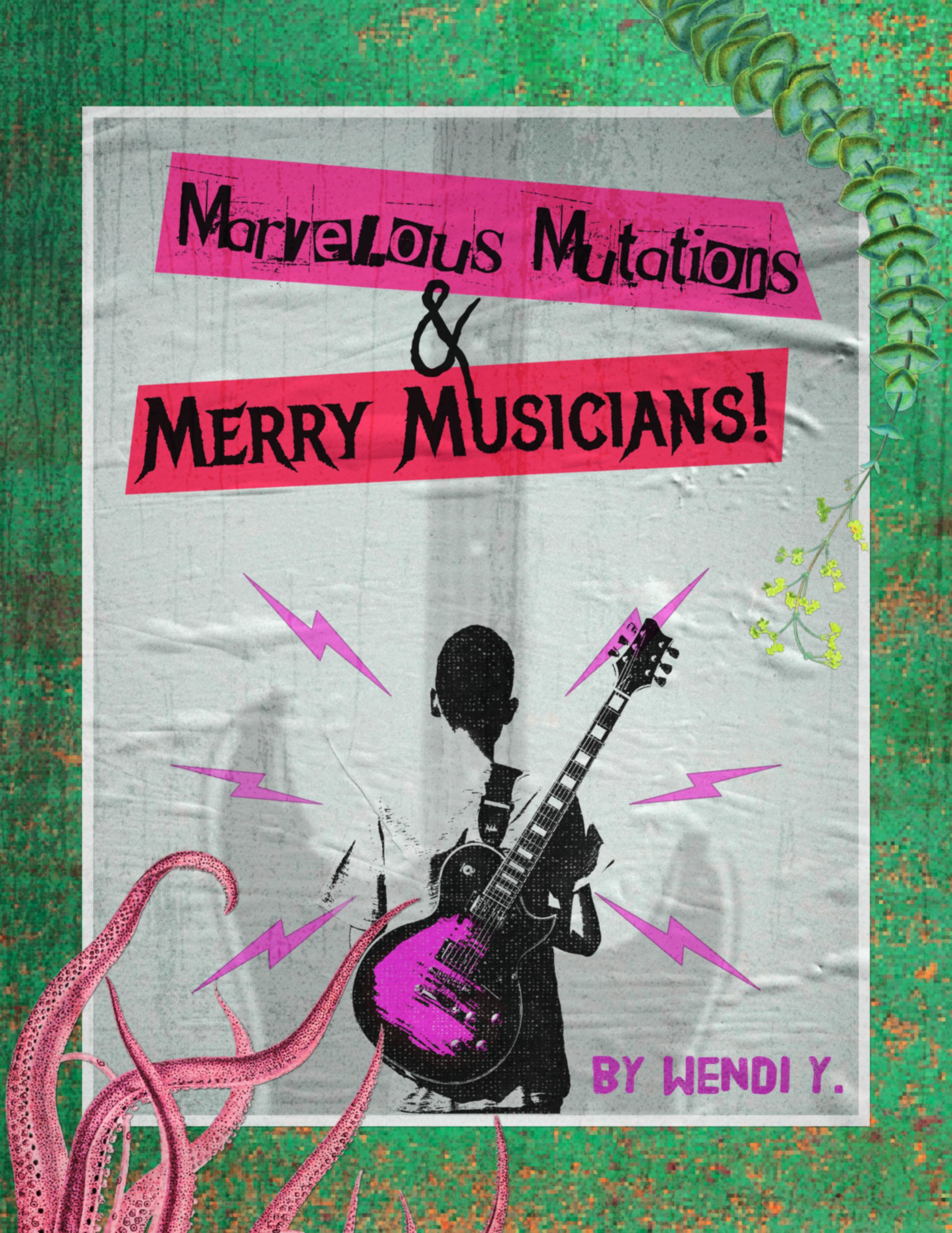

Marvelous Mutations & Merry Musicians

Or as its abbreviated MMnMM :P a wonderful setting (and system) book for a gonzo post-post apocalyptic world of wandering musicians and strange musical magics. 

I love the setting, its delightfully over the top and fun but loose so you can toy with it.

Mechanically the Wendiverse framework is lightweight, taking after games like Messerspiel with a dice pool based resolution system, but taking a sort of story focused bent embodied by the Needs/Wants/Beats mechanics. This in particular I think has a lot of potential, you can even chop out the numbers/dice and it works fantastically. I've been stealing it for my own stuff since I read it. The mechanic lets players direct and decide their characters own development and potentially character arcs without manhandling the game  or stepping on other players toes.

If I must make one criticism, its that it doesn't have as clear player goals as Apotheosis Janitors at start. However the premise of 'wandering musicians' lends itself well to the creation of conflict, and there are ample tools within for generating adventure.

And of course the whole thing is fantastically, nay, decadently filled with images of Wendi's own conjuring and creation. I fucking adore the mushroom man playing an accordion and the purple octopus saxophone player. 

Oh did I mention the pdf is completely free? Because Wendi is awesome.

MMnMM also currently has an adventure jam (or should I say a Bop) happening.
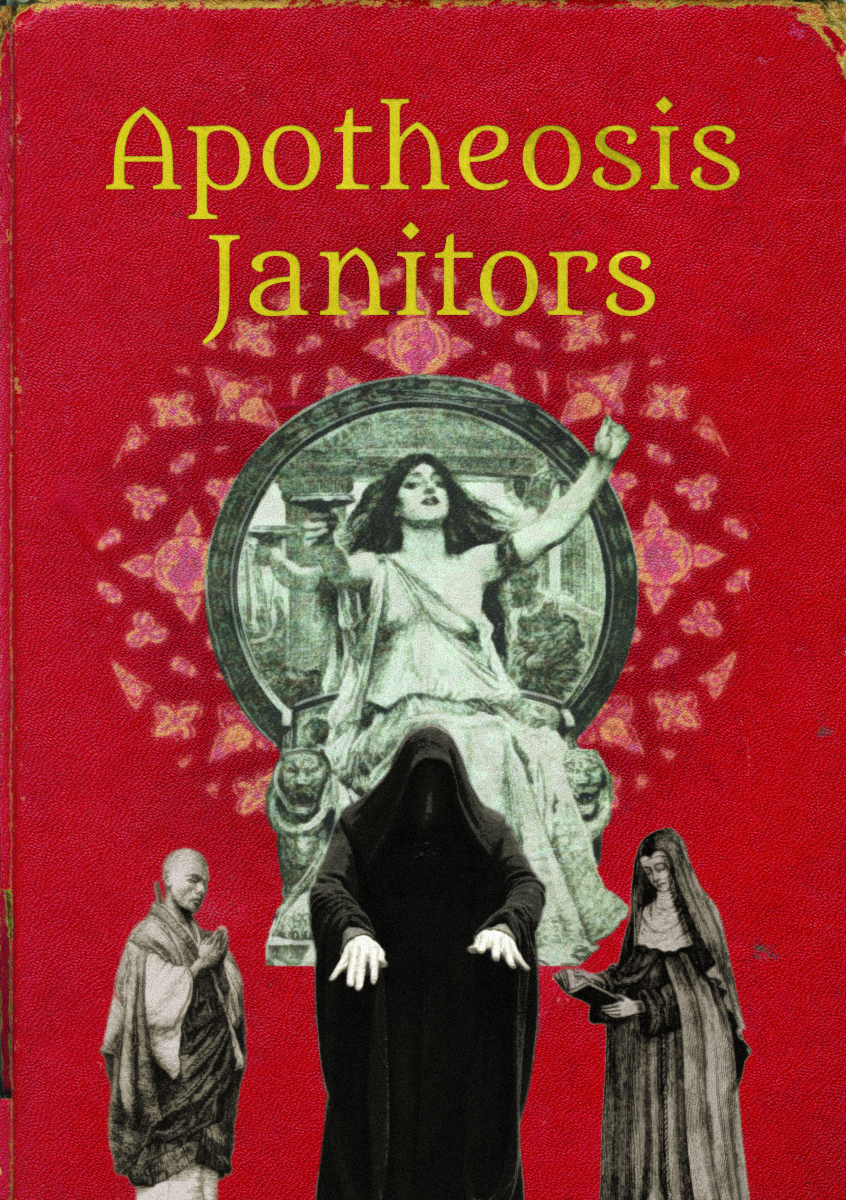

Apotheosis Janitors 

This game has the delightful premise of being the acolytes of a 'god', who is fact an ascended mortal, charged with the dirty work of wiping away the evidence of your god's non-godly origins. For me this is a very strong premise for a game as it immediately gives a strong thoroughline.

This game is the first of the Wendiverse (and co-made with ContrabandRimer) and you can see framework beginning to take shape. It lacks the Beats mechanic of MMnMM but has its own unique system tidbit for praying to your god. As well as tools for building your cult and its doctrines. Furthermore, the book features a factions section which provide loose templates for notable factions of the game world which can be easily customized while retaining the same shape and theme. I particularly like the way these factions are formatted.

And of course Apotheosis Janitors is also free and decadently layed-out.

Closing Thoughts

The Wendiverse framework is quite versatile for engaging in a variety of worlds with its play style, and easily hackable to boot since most of the work is merely in writing up the setting details. And both of the games written so far are wonderfully evocative and easy to pick up and play. I really hope to see this system being used more in the future.

Wendi is at this moment working on another project, an urban fantasy game focused on what are traditionally considered monsters through a queer lens. It's looking quite fantastic already and has even more tools for building the world than MMnMM or Apotheosis Janitors.

Monday, September 7, 2020

Worldbuilding Queerness #3


The Veluoga were originally a hill people living in scattered fortress settlements bordering the vast wastes of the Polar Lords. Then, some fifty odd years ago, they conquered their way down the rivers of the eastern basin and to the edge of the sea.

They ride upon shaggy mountain goats and form complicated familial arrangements based on webs of multiple husbands and wives. Richly brocaded and colored fabrics are highly valued and often they trade or raid the southern cities for such.

For the Veluoga romantic relations involve cycles of age and responsibility. For early years of ones life till coming of age only same sex relations are tolerated. Upon reaching marriageable age opposite sex relations become the new norm. And finally in elder years any relations go.

Likewise, in youth ones number of partners may range as wide as one likes, but upon marriage must be restricted to the number of married partners. And upon old age is once again allowed to be as wide as one wishes.


The Stone Monks dwell in their cliff side monasteries far removed from the outside world. Food is farmed from terraces and within the monastery walls philosophy and magecraft is taught.

Skilled are their mages in the shaping of stone. The very canyons they dwell in are said to have been struck into existence by the mage founder of their culture.

Key in their philosophy is the concept creation. To craft something is akin to giving birth, the highest and most precious of acts. As such the mages spend most of their time creating art and chiseling the elaborate sculptures that line the canyon walls and denote which monastery controls this land. 

They are a matriarchal society, with each monastery run by an abbess who has beaten the previous abbess in contest of art (judged by their peers).

Men for the most part are expected to tend the fields and do housework such as cleaning and cooking. However, persons of any gender are allowed to train in the arts but must prove themselves with a magnum opus to be allowed lessons in magecraft. 

It is claimed by some, that the most skilled of their mages can shape the very clay of your flesh. And spawn from you identical clones.

Thursday, August 13, 2020

Worldbuilding Queerness #2

Byzantine Government - Ancient History Encyclopedia


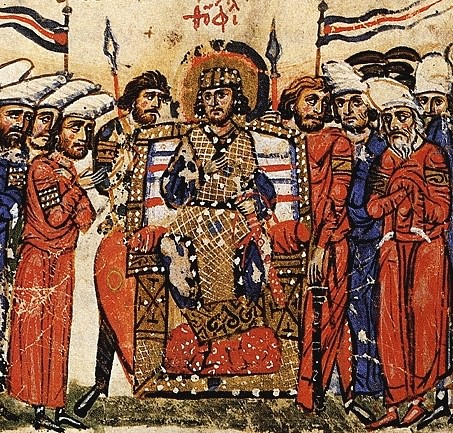
In the multiethnic Velosi Empire it is held that anyone who is willing, irregardless of background, may offer themselves forth and have their identity and personhood stripped away in order to join the ranks of the identity-less Bureaucrat-Soldiers who administer and wage the empire's wars.

To become a Bureaucrat-Soldier is to abandon all vestiges of the former self. No personal items may be kept. Hair is shaved, genitals castrated, tattoos and birthmarks removed with ointments. Lastly the name is ritually written on a note of paper and burned. 

From then on the Bureaucrat-Soldier is known by their rank and number.

Upon completing their twenty year service a Bureaucrat-Soldier is given the choice of either remain onto death or to reentering a civilian life with a small pension and due accolades.

While not officially endorsed, it is a commonly held fact that upon taking up the mantle of gender and identity once more you are not bound to that of your past and may take what gender and life you will.

Viking longhouse | Viking house, Tolkien illustration, Tolkien


Contrary to popular belief, the Lodge Dwellers of the western coasts do not, in fact, ritually consume their spouses after conception. This being a misunderstood and greatly exaggerated version of a traditional marriage ritual wherein which two partners both bloodlet then consume the opposite numbers blood.

Faulty translations and bigotry on the part of early visitors is generally blame for the spread of such nonsense. 

Another such cultural practice greatly misunderstood by foreigners is that of Second Marriage. Among the Lodge Dwellers it is expected that a woman marry a man (and vice versa) and have a child firstly in life, but afterwards may marry and lay as they choose.

It is not required that the previous marriage is terminated in order to proceed with the second however, thusly creating large extended familial relations. 

Saturday, August 1, 2020

Worldbuilding Queerness: Examples

Follow up to this post. Some examples of how to go about it.

High up in the tall mountains where the air is bitter and thin and the snows do not melt there live the Root-Folk who farm the starchy tubers and herd the great hairy yaks. The Root-Folk organize themselves into clans based around their stepped farmlands, essentially being large familial units.

Roles are gendered and split. Men do the work of farming the tubers, repairing structures, and crafting wood. Women do the work of herding the yaks, weaving the wool, and raising children. Both men and women do battle against the other clans. 

Traditionally there are two sorts of marriage, that for the purposes of conceiving and raising a child, which lasts as long as the two parties agree to raise said child together. And that for the purposes of inter clan alliances, which lasts as long as the good graces of the two clans does.

However in both cases partners are allowed, and indeed expected, to keep lovers of either gender. Both forms of marriage are more akin to mutual agreements towards a goal (the first being raising a child, the second being an alliance) with other relationships freely permissible. 

Ancient Mesopotamian Civilization - Sada El balad


Among the Kulnites of the great river cities when a parent is pregnant they will preform a specific ritual to ensure the preferred gender of the baby they give birth too. Of course the result is not always exactly what the parent desired. 

When this happens it is assumed (even to the parents disappointment) that the gods intervened for their own obscure purposes. Such a child is deemed God-Touched and now has two options in life. When they reach the traditional age of adulthood, being fifteen among the Kulnites, they must choose between joining the priesthood and following their parents craft.

Joining the priesthood offers potentially great wealth and influence but comes at the cost of cutting all ties with their family. A difficult choice to make.

Regardless of their choice, all God-Touched are raised to the expectations of their own unique gender. Not quite woman or man, something all of its own. While either man's or woman's work are open for pursuit, they are expected to walk a fine line between not favoring one or other for fear of angering the gods. 

While the priesthood may not sire children without divine permission (granted by the Arch-Priest), God-Touched may lay with those who they please. A freedom not granted to the other genders.


Of course, both of these examples are rather tame and do not even take into account magic and other potential speculative aspects. But they're good examples of how this kind of thing should go. 

If you would like this to be regular thing, creating examples of worldbuilding queerness, please leave a comment!

Tuesday, July 28, 2020

Queerness, Worldbuilding Culture, & Ursula K. Le Guin

So this post was prompted by my love for Ewa's wonderful Worldbuilding Notes YouTube channel which you should defiantly go check out, like right now. I'll wait.

River Basin | Getting Dressed by Worldbuilding Notes
From The River Basin: The Queens and their King

So, one of the big influences Ewa cites is Ursula K. Le Guin, a favorite author of mine as well. This got me thinking about how we worldbuild culture in our games (as well as more broadly in speculative fiction). And how we depict and include queerness and diversity in our works.

Ursula K. Le Guin - Wikipedia

The most common method I have seen (both in game worlds and story worlds) is the "Everyone" style, where gay, trans, non-binary folk, and all are included and fully accepted in the world. Essentially the no prejudice, no hate model.

Now, and let me be clear about this, There Is Nothing Wrong With This Way Of Doing Things, it creates a more diverse setting and incorporates queer people into the fiction. As well, for many, it offers a safe refuge from real world hate. People can and should still make worlds like this.

But for the purposes of this post, I'd like to explore a different method of doing things

When endeavoring to make stranger, more interesting cultures it is important to keep in mind that much of what we consider as normal is utterly baseless and only a symptom of our culture, not necessarily a universal. This applies to almost all matters from gender to warfare. What is and isn't considered obscene. What is and isn't masculine or feminine. All of these things are potentially points to vary and change in pursuit of a more unique culture. 

However one must also consider the ways in which the environment will shape a culture. Things do not exist in a vacuum after all. It is here where I would recommend watching Ewa's videos again for they contain many examples of how environments, and especially magical or supernatural influences, can shape how a society develops. Also they are just a delight to watch.

So, when making cultures for fictional worlds one should take the time to consider ones personal bias and cultural norms and decide how this cultural may differ to those. Is weaponry obscene? How does marriage work? 

Now back around to queerness. It should go without saying that modern (and especially "western") ideas about gender and sexuality are far, far, so very far from being universal. In many real societies across the globe queer people have often been deeply tied into cultural practices.

Essentially the point I'm making is to Include Queerness In Your Cultures As Integrated Parts Of That Culture. Consider how sexuality and gender tie into spirituality. Consider how they don't tie into spirituality. How does gender work? Do people stay the same gender over time? How does this tie into what work people do? Are there groups that are marginalized in this culture?


So this post was a bit ramble and probably not as concise or clear as it should have been. I'll probably do a followup sometime. If you have any questions about my reason please feel free to ask!  (also go watch Worldbuilding Notes. Dooo itttt.)